




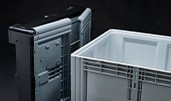

In retail distribution logistics, the time between a lorry arriving and goods being replenished on the shelf is a cost many companies underestimate. The display pallet exists precisely to reduce it: a compact-format pallet that arrives loaded from the distribution centre and is placed directly in the point-of-sale display, without transshipping the goods.
What is a display pallet
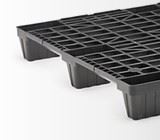
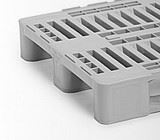
A display pallet (also called an expo pallet or floor display pallet) is a reduced-size pallet designed to present and sell goods directly at the point of sale. Unlike a standard logistics pallet, which serves a transport and storage function, the display pallet also has a commercial function: the goods arrive already placed on it and are displayed as they are in the store.
In addition, at Naeco our display pallets feature an innovative POS fixing system called Easy Fix. This system reduces preparation times, ensures load stability and improves in-store presence.
The most common format in Europe measures 800 × 600 mm, equivalent to half a Euro pallet (1,200 × 800 mm). A quarter-pallet format (600 × 400 mm) also exists, common for promotions with smaller volumes or in limited spaces.
Differences from a Euro pallet
| Euro pallet | Display pallet | |
|---|---|---|
| Standard sizes | 1,200 × 800 mm | 800 × 600 mm / 600 × 400 mm |
| Main function | Transport and storage | In-store display and sales |
| Final destination | Warehouse or logistics platform | Sales floor or point of sale |
| Replenishment | Usually requires transfer to shelf | Placed directly, no transshipping |
Where are display pallets used?
Display pallets are present in any high-volume sales environment where fast replenishment is key:
- Large stores and hypermarkets: for seasonal promotions, new products or high-turnover items placed at gondola ends or central aisles.
- Cash & carry and buying clubs: customers access the pallet directly and serve themselves. The display pallet reduces restocking work for staff.
- Food and beverage distribution: especially in soft drinks, tinned goods, dairy and snacks, where mass promotions are common.
- Household and consumer goods sector: detergents, personal hygiene and cleaning products promoted in multipacks on the pallet.
Plastic display pallets versus other materials
Historically, display pallets were made as single-use items in materials such as cardboard or lightweight chipboard. Today, many operations have switched to plastic for practical reasons:
- Reusable: a plastic pallet completes many more cycles compared to single-use cardboard, reducing the cost per operation and waste generation.
- Moisture-resistant: cardboard deforms in refrigerated or high-humidity environments; plastic does not.
- No phytosanitary restrictions: unlike wood, plastic does not require ISPM 15 treatment for export, simplifying international logistics.
- Hygiene: washable, watertight and does not absorb liquids or odours — especially relevant in food and household goods.
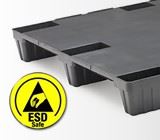
At Naeco we manufacture display pallets in recycled plastic in the 800 × 600 mm and 600 × 400 mm formats, suitable for direct use on the sales floor. Furthermore, with our Naeco Rewind programme we buy back your pallets at the end of their useful life.
Do you need display pallets for your operation?
Browse our recycled plastic models and discover our innovative Easy Fix system, which improves in-store presence and supports a potential increase in sales.


