






Do you need to decide between plastic and wooden pallets for your supply chain? It is a logical question and one of the most common in industrial logistics. The answer depends on factors such as your industry, your volume, your distribution routes, and the markets you export to.
In this article we compare both options with real data so you can make an informed decision.
1. What each type of pallet is and what it is used for
The wooden pallet
The wooden pallet has been the most widely used historically. The two most in-demand types on the market are the European pallet or euro pallet (1200 × 800 mm), managed by EPAL, and the American pallet (1200 × 1000 mm). Its manufacturing is straightforward and its initial cost is low, which explains its dominance in warehouse logistics for decades.
The plastic pallet
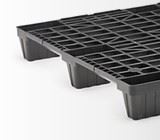
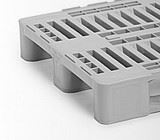
The plastic pallet is made primarily from polypropylene (PP) or high-density polyethylene (HDPE). It is lighter, resistant to moisture, easy to clean, and compatible with electronic traceability systems. Its useful life can exceed 15 years with proper maintenance.
Naeco Packaging plastic pallets are made from post-consumer recycled PP and support logo marking or RFID inclusion to improve traceability.
2. Direct comparison: key criteria table
A picture is worth a thousand words. This table lets you see at a glance where each material wins.
| Criterion | Plastic pallet | Wooden pallet |
|---|---|---|
| Useful life | Long | Medium/Short |
| Weight (Euro 1200×800) | ~15 kg | ~20–25 kg |
| Hygiene | Does not absorb moisture | Absorbs odors and bacteria |
| Export regulation | Exempt from ISPM-15 | Mandatory certificate |
| Initial cost | Higher investment | Lower entry cost |
| Cost per use | Lower (reusable) | Higher (lower durability) |
| Repairability | Spare parts for repairable models, welding for others | Limited |
| Environmental impact | 100% recyclable | Renewable but perishable |
| Traceability / RFID | Easy integration | Difficult to integrate |
As shown, the plastic pallet clearly wins in durability, hygiene, and compliance with export regulations. The wooden pallet remains competitive in single-use contexts or with very tight entry budgets.
3. The cost factor: do not stop at the purchase price
One of the most common mistakes when comparing pallets is looking only at the unit purchase price. But the real cost must be calculated per trip or per year, not per unit.
Sample calculation of real cost per trip
- Standard wooden pallet: ~€15/unit, average life 15 trips → €1/trip*.
- Heavy-duty plastic pallet: ~€25/unit, average life 35 trips → €0.72/trip*.
The difference seems small, but if you move 25,000 pallets per year, the savings can exceed €7,000 annually, not counting replacement, repair, and waste management costs. (*Estimated data based on real cases)
From 30-40 annual rotations, the plastic pallet typically becomes more cost-effective than the wooden one. For closed distribution circuits, the return on investment is almost immediate.
4. ISPM-15 regulation: why exporters choose plastic
If your company exports outside the European Union, you are already familiar with the ISPM-15 (or NIMF-15) regulation: all wood packaging materials used in international shipping, including pallets, must receive certified phytosanitary treatment (dry heat or methyl bromide) and carry the HT/MB mark.
The plastic pallet is exempt from this regulation, as it cannot harbor pathogenic organisms. This means:
- Elimination of certification and treatment costs.
- Reduction of rejections at destination customs.
- More agile export processes, especially to the USA, China, and Australia.
- No risk of fines for non-compliance with phytosanitary regulations.
For companies with high export volumes, this point alone can justify the switch to plastic.
5. Sectors where the plastic pallet is the only real option
Food and beverage
European food hygiene regulations (EC Regulation 852/2004) require non-porous, easy-to-clean contact surfaces. The wooden pallet absorbs moisture, bacteria, and odors, which can result in non-compliance during IFS, BRC, or FSSC 22000 audits. The plastic pallet is cleaned and disinfected in seconds.
Pharmaceutical and cosmetic
EMA GMP guidelines and GDP standards require materials that do not contaminate the product, do not release particles, and are traceable. The plastic pallet easily exceeds these requirements.
Electronics and automotive
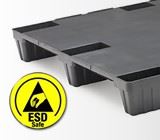
High-value loads require stable pallets, free of nails and splinters, with high resistance to deflection. Plastic also prevents static electricity issues when manufactured in antistatic material.
Chemical
The resistance of PP and HDPE to acids, for example, makes the plastic pallet the natural choice for chemical warehouses where wood could degrade upon contact with spills.
6. Sustainability: the most current debate
There is a frequent argument worth addressing: "the wooden pallet is more sustainable because it is a natural material", but the reality is more complex.
A wooden pallet that lasts 3 years and is then destroyed has an equivalent impact to several recycled plastic pallets with a 20-year useful life. The complete lifecycle analysis (LCA) covering production, transport, use, and end of life tips the balance toward plastic when the circuit is closed and the pallet is recovered.
Moreover, the EU Packaging and Packaging Waste Regulation (PPWR, in force since 2026) actively encourages the use of recycled and reusable materials. Naeco works with certified post-consumer recycled PP to help you meet those objectives.
Naeco Packaging offers pallets with 100% post-consumer recycled content certified by Recyclass, compatible with PPWR 2026 objectives.
Conclusion: what pallet does your company need?
If your company operates in food, pharmaceutical, chemical industries, or exports outside the EU, the plastic pallet is the most efficient, safe, and cost-effective long-term option.
The key is to calculate the total cost per trip, assess the regulations applicable to your business, and project the volume over 3-5 years. In most industrial cases, the switch to plastic pays for itself within 12-18 months.
Want to know which pallet best fits your operations?
Request a personalised no-commitment cost studyFrequently asked questions about plastic and wooden pallets
The initial purchase price of a plastic pallet is between 1.5 and 3 times higher than a wooden one. However, the real cost per trip is usually lower: a wooden pallet costing €15 and lasting 15 trips equals €1/trip, while a €25 plastic pallet with a useful life of 35 trips drops to €0.72/trip. In circuits with more than 30-40 annual rotations, the investment in plastic pays off quickly. A well-maintained plastic pallet can last between 10 and 20 years, depending on the model, type of load, and usage conditions. Models made of polypropylene (PP) or high-density polyethylene (HDPE) resist moisture, impacts, and most industrial chemicals, extending their useful life compared to wooden pallets, which typically deteriorate within 3 to 5 years under intensive use conditions. It depends on the model. High-strength plastic pallets support static loads of between 3,000 and 6,000 kg and dynamic loads of between 1,000 and 2,000 kg, comparable to EPAL-quality wooden euro pallets. Lightweight or nestable models have lower load capacity, so it is important to choose the model according to the application. Naeco can advise you on which model best suits your typical load weight. European food hygiene regulations (EC Regulation 852/2004) require that materials in contact with food be non-porous, easy to clean, and non-contaminating. The plastic pallet naturally meets these requirements. The wooden pallet, being porous and absorbing moisture, can result in non-compliance during IFS, BRC, or FSSC 22000 audits, especially in humid areas or in direct contact with the product. ISPM-15 (also known as NIMF-15) is an international phytosanitary regulation that requires all wood packaging materials crossing borders outside the EU to be heat-treated or treated with methyl bromide, to prevent the spread of pests. The plastic pallet is exempt because it cannot harbor pathogenic organisms. This eliminates certification costs, possible customs delays, and the risk of fines for non-compliance, a significant operational advantage for exporting companies. Yes. Plastic pallets made of PP or HDPE are 100% recyclable at the end of their useful life. Naeco Packaging manufactures its pallets with Recyclass-certified post-consumer recycled content and has collection circuits to transform end-of-life pallets into new raw material. This makes them an option aligned with circular economy objectives and the new EU Packaging Regulation (PPWR 2026).How much more expensive is a plastic pallet than a wooden one?
How many years does a plastic pallet last?
Do plastic pallets hold the same weight as wooden ones?
What pallet does European food regulation recommend?
What does it mean that a pallet is exempt from ISPM-15?
Can a plastic pallet be recycled when it is no longer usable?


