




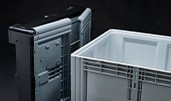

E-commerce has transformed the supply chain from top to bottom. What was once a relatively predictable flow (large orders, few destinations, long replenishment cycles) has become a model of high turnover, multiple channels and frequent returns. In that environment, the pallet stops being a secondary element and becomes a key part of daily operations.
If you manage an e-commerce warehouse or work with a third-party logistics provider (3PL), your choice of pallet directly impacts the speed of order preparation, available space and the cost of reverse logistics.
E-commerce changes the rules of the warehouse
Traditional logistics moved few references in large volumes. E-commerce does exactly the opposite: many references in small quantities, with very tight delivery deadlines and a return rate that can exceed 20% in categories such as fashion or electronics.
This has direct consequences on how work is carried out in the warehouse:
- High SKU turnover. Pallets move constantly between receiving, storage and preparation areas.
- Frequent picking. Operators work with pallets several times a day, which makes the weight of the empty pallet relevant.
- Reverse logistics. Empty pallets travel back to the warehouse frequently. Their size when empty matters.
- Limited space. Fulfillment warehouses, especially outsourced ones, do not have square metres to spare.
What type of pallet does an e-commerce warehouse need?
There is no single pallet that works for every business model. The choice depends on how your distribution chain operates:
| Warehouse use | Recommended pallet type | Why |
|---|---|---|
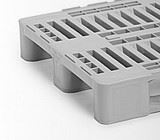
| Rack storage | Rigid pallet with stringers | Requires load resistance at height and stability |
| Frequent picking | Lightweight pallet | Facilitates manual handling and reduces operator fatigue |
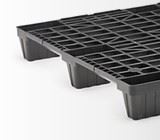
| Last-mile transport | Nestable pallet | Takes up much less space when returning empty |
| Fulfillment with 3PL | Reusable lightweight pallet | Reduces cost per cycle and is compatible with the operator's systems |
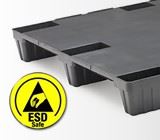
| Delicate products (cosmetics, food) | Hygienic pallet | Smooth surfaces, no splinters, easy to disinfect |
Why plastic pallets suit e-commerce
E-commerce demands versatile, manageable and easy-to-maintain pallets. Plastic pallets meet these requirements well for several reasons:
They are lighter. In a high-turnover warehouse, the weight of an empty pallet is not a minor detail. A lighter pallet makes manual handling easier, reduces operator fatigue and allows it to be moved more swiftly between areas.
They are nestable or stackable. Nestable models can be stacked on top of each other when empty, significantly reducing the space they occupy. This is especially valuable in reverse logistics: when the truck returns to the warehouse with empty pallets, it can carry many more in the same space.
They are reusable for many cycles. Unlike wood, which deteriorates with use, plastic maintains its properties for years. This reduces replacement costs and makes packaging expenditure more predictable.
They are easy to clean. In categories such as food, cosmetics or hygiene products, pallet cleanliness is a requirement. Plastic does not absorb liquids or generate splinters, and can be disinfected with pressurised water or standard cleaning products.
No splinters or loose nails. In warehouses where operators work at high speed, a worn wooden pallet can cause injuries. Plastic eliminates that risk.
Nestable pallets and outsourced fulfillment
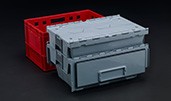
One of the fastest-growing models in e-commerce is outsourced fulfillment: the company sells online but delegates storage and shipping to a 3PL. In that model, pallets travel constantly between the operator's warehouse and delivery or collection points.
Nestable pallets have a clear advantage here: when empty, they stack in a way that takes up a fraction of the space that conventional pallets would require. This has a direct impact on return transport costs and on the storage space you need to reserve for pallets not in use.
In operations with a high volume of daily shipments, this space saving can make the difference between needing to expand facilities or not.
Frequently asked questions about pallets in e-commerce
The euro pallet (1200x800 mm) is the most widely used in Spanish warehouses. For lower-volume picking operations or in more restricted spaces, the half pallet (600x800 mm) is also very common. Yes. Naeco plastic pallets are designed to be compatible with standard material handling equipment: manual and electric pallet trucks, forklifts and automated transport systems. It depends on the model and the use, but good-quality plastic pallets are designed to withstand hundreds of loading and unloading cycles, which makes their total cost lower than wood in the long run. Yes, although it depends on the model. Naeco has references designed specifically for rack use, with the resistance needed to support loads at height. Generally, yes. Reusable plastic pallets are compatible with most standard storage systems, making them suitable for both in-house warehouses and external logistics operators.What pallet size is most common in e-commerce?
Are plastic pallets compatible with standard forklifts and pallet trucks?
How many times can a plastic pallet be reused?
Are plastic pallets suitable for rack storage?
Can I use the same pallets for my own warehouse and when working with a 3PL?
If you want to find out which pallet model best suits your e-commerce operation, at Naeco we can help you find the most efficient solution for your logistics. Explore our range of plastic pallets.


